
A tense summer in Geneva
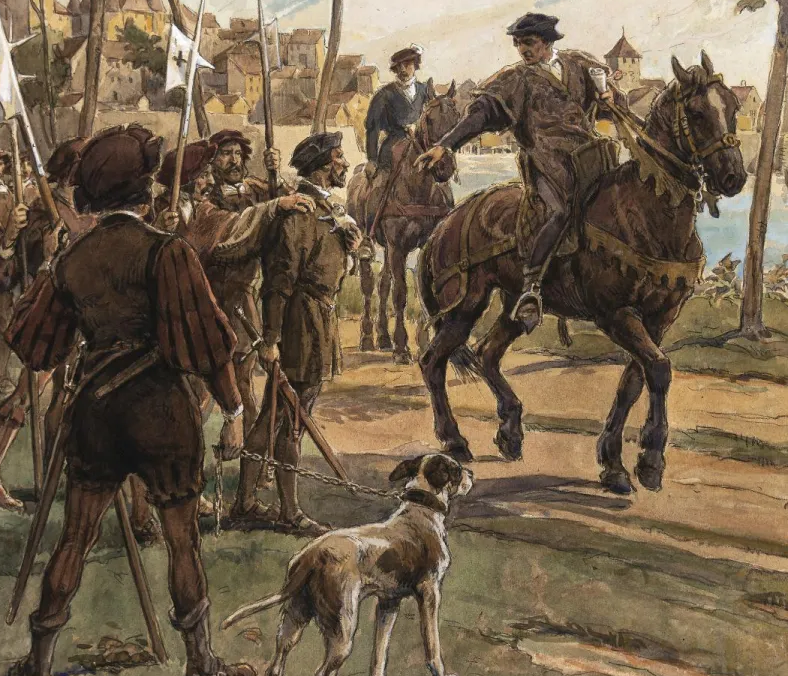
Today, we revisit a significant episode in Geneva’s history, which took place exactly 423 years ago, on July 7, 1602. At that time, Geneva was in the midst of extreme tensions with Savoy, on the eve of the Escalade. On that day, after dinner, four horsemen from the Bonne garrison entered the house of Gabriel de La Mer, an apothecary based in Cologny, on Geneva’s franchise territory. Citing retaliation, they forcibly took him to Bonne.
The reason given? A few days earlier, a Savoyard soldier had been arrested in town after fighting in an inn, going so far as to draw his sword and wound another man. In response to this detention, the Savoyards took Gabriel de La Mer hostage. In turn, the Geneva Petit Conseil decided to detain the most high-profile Savoyards present in the city. The taking of hostages thus became a method of negotiation and pressure for both sides, each hoping to secure the release of its citizens.
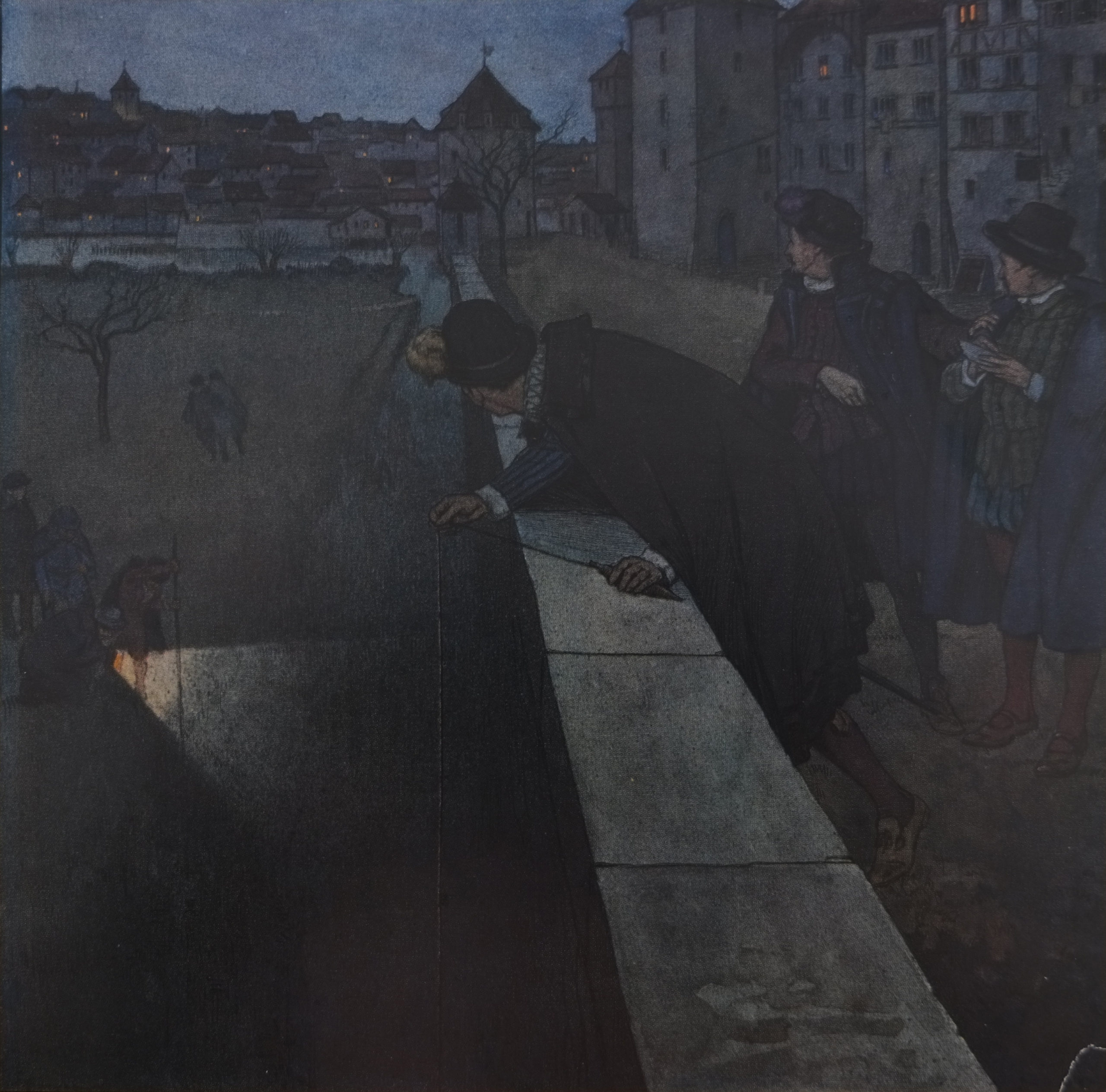
Ils mesurèrent la hauteur des murailles à la Corraterie. Drawing by Édouard Elzingre.
Who was Gabriel de La Mer?
A native of Saint-Rémy-de-Provence, Gabriel de La Mer was granted Geneva citizenship in 1555, while still a child, at the same time as his father. He opened an apothecary shop in 1571, married Marie Baud, and became actively involved in civic life: he was a dizenier in 1575, a member of the Council of Two Hundred in 1576, an elder of the Consistory from 1594 to 1605, and a sworn apothecary in 1607. He died on January 30, 1611, leaving behind the memory of a dedicated man, caught up despite himself in the turmoil of Geneva and Savoy politics.
The outcome
It was Brunaulieu — lieutenant colonel of the La Val d’Isère regiment and governor of Bonne, famous for commanding the Savoyard assault group at the Escalade, where he would meet his death — who had ordered the arrest of Gabriel de La Mer. But on July 9, it was his superior, the La Val d’Isère Baron, who ordered his release. However, the exchange of hostages did not take place until the Geneva authorities had completed their investigation into the behavior of their Savoyard prisoner. This caution was due to Geneva’s desire not to give in to pressure and to maintain the legitimacy of its judicial decisions. Unfortunately, the Council’s archives do not allow us to identify the Savoyard soldier in question precisely, as the criminal trials of the early 17th century have disappeared.
He could be the mysterious “Provençal,” arrested during an espionage attempt mentioned in a letter from D’Albigny dated June 19/29, 1602. This “Provençal” could even be the Count of Saint-Front, as we know that he was part of the group of four spies tasked with preparing the Escalade, but this hypothesis remains weak. In any case, he must have been someone important to Brunaulieu, since he deemed it worthwile to arrest a member of the Council of Two Hundred in order to recover him.
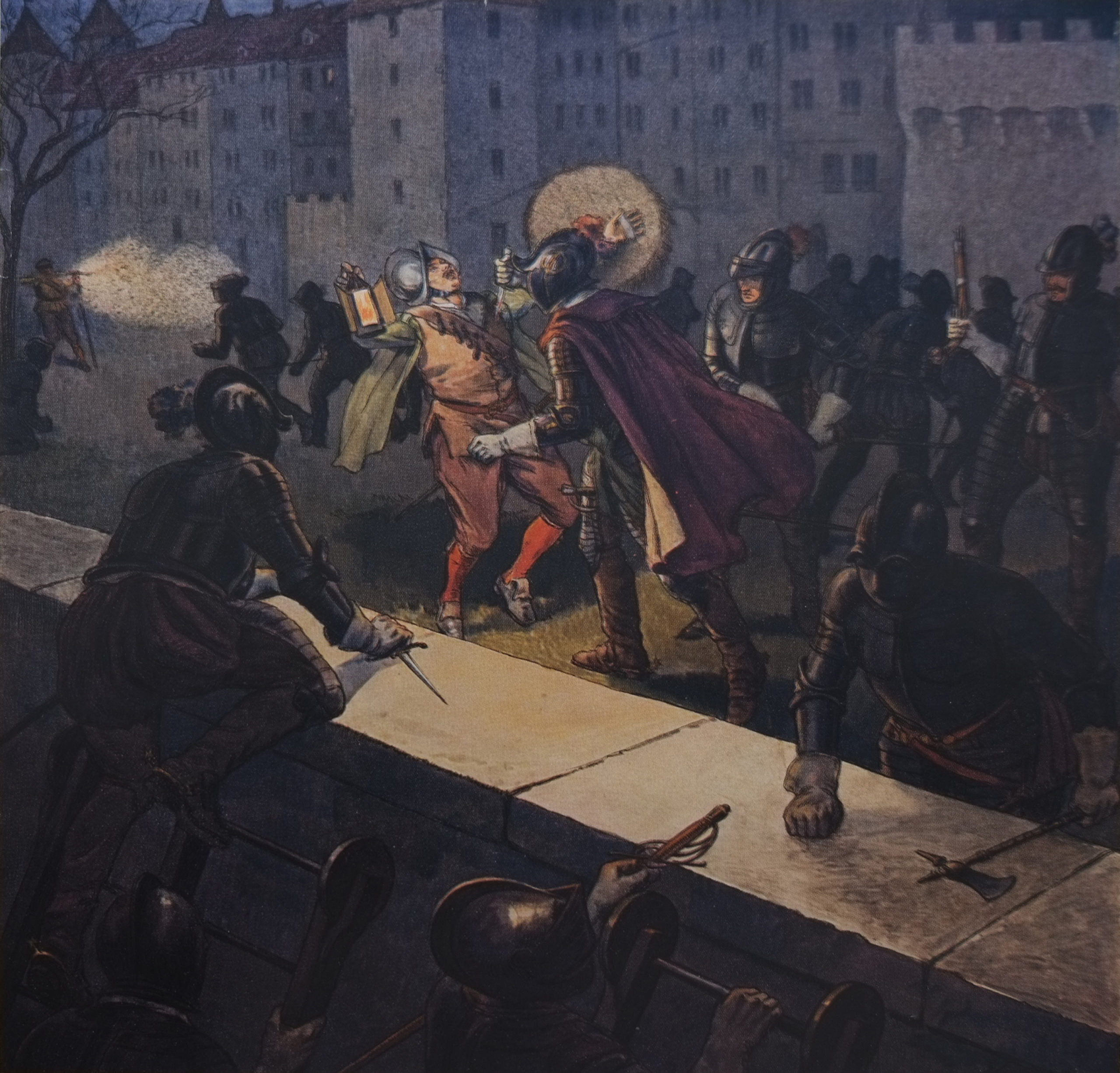
Brunaulieu se jette sur le caporal. Drawing by Édouard Elzingre.
A context of reprisals and espionage
This episode was not an isolated one. It was part of a series of incidents and tensions that marked the year 1602, on the eve of the Escalade. The memory of the Cadet-Sautier affair, which occurred in April, was still fresh in the minds of the Petit Conseil, who feared an escalation of reprisals.
There is no evidence to confirm or deny that Gabriel de La Mer’s arrest was directly linked to the earlier arrest of the spy nicknamed “Provençal”. However, Brunaulieu was accountable to the Duke of Savoy for preparing the Escalade, and the exchange of hostages may have seemed to him the best way to recover one of his spies.
The arrest of Gabriel de La Mer illustrates the brutality of the practices of the time: hostage-taking and reprisals were common diplomatic weapons, used by both Geneva and Savoy to exert pressure and get what they wanted. This episode, although less well known than the famous night of the Escalade, bears witness to the climate of insecurity and suspicion that prevailed around the city at the time, on the eve of one of the founding events of Geneva’s identity.